
Old Bridge Roofing handles commercial roofing in Old Bridge, NJ, serving surrounding cities including South River, Aberdeen, South Amboy, Holmdel and Highland Park, and our more than 20 years in the trade include the flat and low-slope roofs on stores, offices and apartment buildings. A commercial roof protects inventory, tenants and equipment, so a leak costs more than the repair itself. We work to keep these roofs dry, documented and on a predictable schedule.
Commercial roofs need a different set of skills from shingled homes. Membranes, drains, curbs, parapets and rooftop units all have their own details. We repair and replace modified bitumen, EPDM, TPO and PVC roofs and inspect them on a schedule that fits the building.
Every proposal breaks the work into clear lines, from tear-off and insulation to membrane, flashing and drains. Owners and managers can compare bids directly and see exactly what each one includes.
Commercial Membrane Roofing Systems
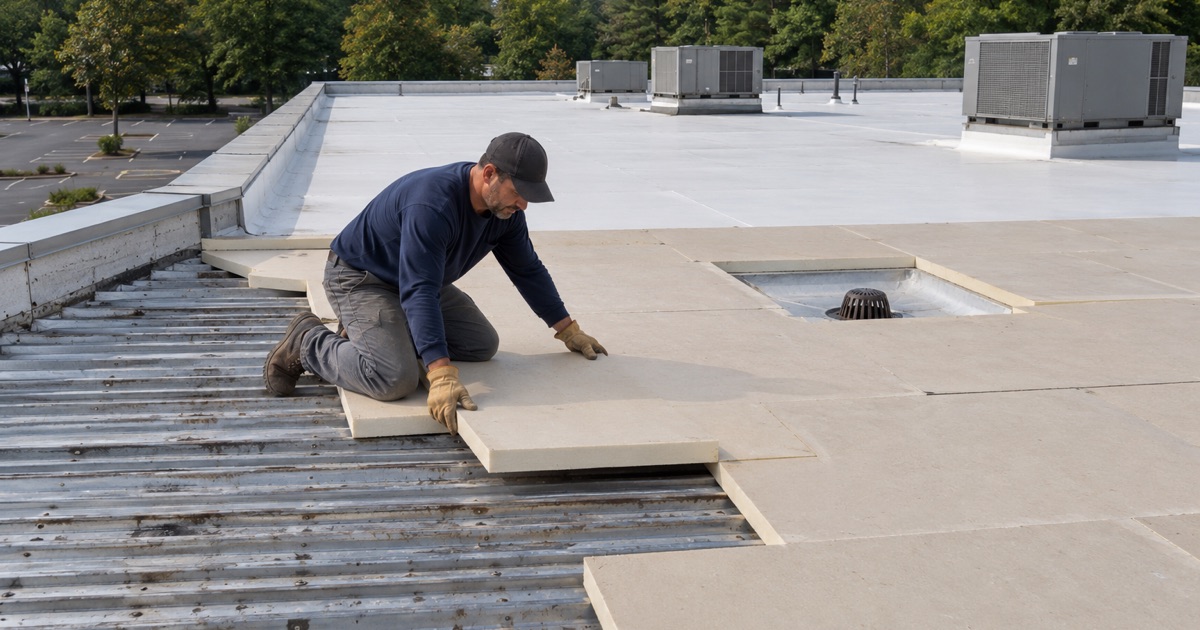
Torch-Down Modified Bitumen
SBS and APP modified bitumen roofs are built up in layers and heat-welded at the seams, creating a thick, durable surface. They handle foot traffic well, which suits roofs with frequent equipment service. A granulated cap sheet protects the membrane from sun.
These roofs usually fail at seams, at flashings where the roof meets walls and curbs, and where blisters have split. Repairs involve cutting out damaged areas and welding new material that laps onto sound membrane. Full replacement is usually needed when the field of the roof has worn thin or the insulation underneath is wet.
EPDM Rubber Membrane
EPDM is a single sheet of synthetic rubber, installed in large pieces with seams joined by adhesive or tape. It is flexible, handles temperature swings well and is straightforward to repair. Many older commercial roofs in the area are EPDM.
EPDM seams can open as the adhesive ages, and the membrane can be punctured by dropped tools or careless foot traffic. We clean, prime and patch with compatible materials, and we look for the cause so the patch does not fail the same way. When the seams are failing all over, replacement is the better investment.
TPO and PVC Single-Ply Membranes
TPO and PVC single-ply membranes have seams that are heat-welded rather than glued, creating a joint that is as strong as the sheet. Their light surfaces reflect sunlight, which can reduce heat gain inside the building. PVC also resists oils and some chemicals, which matters over restaurant exhaust fans.
We weld repairs into the existing membrane after cleaning the weathered surface. On replacements, we lay out the sheets to keep seams out of drainage paths and away from high-traffic areas. Flashings at curbs and walls are welded to the field membrane for a continuous seal.
Commercial Roof Repair and Maintenance
Finding Leaks on Flat Roofs
On a flat roof, water can enter at one spot and travel across the insulation before showing up inside. That makes leak tracing slower than on a pitched roof. We look at the interior stains, then inspect seams, flashings, drains and penetrations on the roof above and uphill of them.
Wet insulation is a common hidden problem, because it stays wet and keeps feeding leaks. We probe suspected areas and replace wet insulation along with the membrane above it. Repairing the membrane alone over wet insulation only delays the next leak.
Drains, Scuppers and Ponding
Standing water on a flat roof speeds up the aging of seams and membrane. Ponding usually comes from clogged drains, scuppers set too high, or a deck that has sagged. A good repair addresses the drainage, not just the membrane.
We clear and inspect drains and scuppers, and we mark where water collects so the pattern is clear. Tapered insulation can correct some low areas during a repair or replacement. A sagging deck is structural work, and we will tell you plainly if that is the real cause.
Rooftop Units, Curbs and Penetrations
HVAC units, exhaust fans and pipe penetrations all break the membrane, and each needs proper flashing. Service technicians walking to rooftop units can damage the membrane along their path. Curb flashings that have pulled away are a frequent leak source.
We reflash curbs and penetrations to match the membrane system, and we can add walkway pads along service routes to protect the roof. During inspections, we note damage from equipment work so it can be repaired before it leaks. Keeping these details tight protects the building’s interior and equipment.
Apartment, Association and Mixed-Use Roofs
Apartment Buildings and Maintenance Codes
New Jersey’s maintenance code for multiple dwellings, N.J.A.C. 5:10, covers the condition of roofs and leaders on those buildings. Owners and managers need roofs that keep tenants dry and leaders that carry water away. A neglected roof becomes a code issue as well as a repair bill.
We provide written inspection reports and repair lists for apartment buildings, separating urgent items from planned work. That helps owners budget and keep records. Work is scheduled with tenant access and notice in mind.
Condominium and Townhouse Associations
Associations often manage roofs across many buildings with a mix of pitched and flat sections. Before writing any proposal, we confirm from the association’s documents or manager which roofs the association is responsible for. That keeps the scope accurate and avoids disputes with owners.
For large communities, we can phase replacements building by building to fit the reserve budget. Each building’s condition is documented consistently, so the board can compare them and set priorities. Clear reports make board decisions easier.
Permits and Working Around Occupied Buildings
Commercial, multifamily and mixed-use roofs fall outside New Jersey’s ordinary-maintenance exemption for detached houses, so replacement and many repairs are permit work. We build permits and inspections into the schedule rather than treating them as an afterthought. Delays are easier to manage when they are planned.
On occupied buildings, we plan around entrances, parking, deliveries and tenants. Crews use fall protection as OSHA requires, and each section is closed in before the end of the day. The site is cleaned daily, including a sweep for fasteners in parking areas.
- 20+ Years in Business
- Attic Checked on Every Leak
- Itemized Written Scopes