Old Bridge Roofing provides roof inspection in Old Bridge, NJ, serving surrounding cities including South River, Aberdeen, South Amboy, Holmdel and Highland Park, drawing on more than 20 years of work on local roofs. An inspection tells you where your roof stands before a leak or a sale forces the question. We look at the roof surface, the flashing and the attic together, then put what we found in writing.
The attic matters as much as the shingles. Staining on the underside of the deck, daylight around a pipe, damp insulation or a musty smell often reveal a problem that looks fine from above. We match what we see inside with what we see outside, so the report describes causes and not just symptoms.
You get photos and a plain written assessment, not a sales pitch. If the roof is in good shape, the report says so. If something needs attention, it lists the items in order of urgency, with an honest view of whether repair or replacement makes more sense.
What Our Roof Inspection Covers
Shingles and the Roof Surface
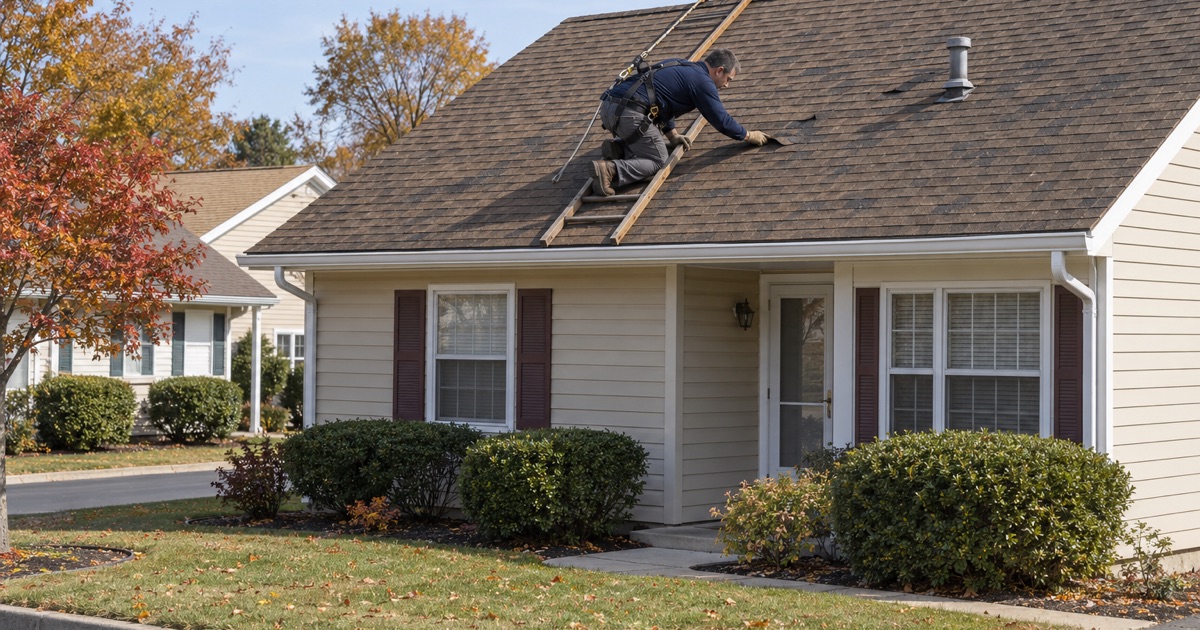
We check shingles for granule loss, curling, cupping, cracking and lifted tabs, slope by slope, because sun and wind wear each face of the roof at a different rate. Granules collecting in the gutters or at the bottom of downspouts are a sign the surface is wearing thin. Missing or creased shingles along ridges and rakes tell us how the roof has handled wind.
We also note the type of shingle, whether three-tab or architectural, and look for signs of an earlier layer underneath. New Jersey’s rehabilitation subcode does not allow a new covering over two or more existing layers, so knowing what is under the current roof affects any future replacement price. The report records the layers we can confirm and how we confirmed them.
Flashing, Pipe Boots and Penetrations
Chimneys, vent pipes, skylights, sidewalls and valleys are where most leaks begin, so we inspect each one closely. Step and counter flashing should be tight against the chimney and wall, pipe boots should be soft and uncracked, and skylight flashing should be intact at the upper corners. Sealant smeared over any of these is a sign of an earlier repair that may be failing again.
We check for a chimney cricket behind wider chimneys, for kick-out flashing where a wall meets the eave, and for drip edge along the eaves and rakes. Missing pieces like these are common on older roofs and are a frequent source of hidden rot. Each finding is photographed so you can see exactly where it is.
Attic Ventilation, Insulation and Decking
Inside the attic, we look at the underside of the decking for water stains, mold, delamination and nail tips showing frost or rust. We check whether soffit vents are open and balanced against the ridge or roof vents, because an attic that cannot breathe ages the roof from underneath. Insulation pushed into the soffits is one of the most common causes of poor airflow.
We also look for bathroom or kitchen fans venting into the attic instead of outdoors, which puts warm, wet air straight onto the cold deck. That moisture can stain the ceiling and look exactly like a roof leak. Finding it during an inspection saves you from paying for a roof repair that would not have helped.
Roof Inspections When You Buy or Sell
A Condition Report Before You List
A seller who knows the roof’s condition before listing is in a much stronger position than one who learns it from the buyer’s inspector. We inspect the roof and write a condition report you can hand to the buyer’s side, with photos and plain descriptions. If small repairs make sense, you can make them before they turn into a price negotiation.
In Old Bridge, the resale certificate sellers obtain through the fire district covers smoke detectors, carbon monoxide detectors and a fire extinguisher. No township rule ties that certificate to the roof, so the roof is left to the buyer’s inspection. A report from a roofer fills that gap with specifics.
Making Sense of the Buyer’s Inspection
General home inspectors often note a roof concern and recommend evaluation by a roofer without saying how serious it is. A line like that can stall a contract while both sides guess at the cost. We inspect the specific item the report flagged and explain what it really is.
Sometimes the finding is a worn pipe boot or a missing shingle that is a small repair. Sometimes it is a sign the roof is near the end of its life. Either way, a written answer from a roofer gives the buyer and seller something solid to negotiate from instead of a worst-case guess.
Repairs Before Closing
When a contract calls for roof repairs before closing, the work has to be done, documented and finished on a deadline. We give a written scope that matches the inspection item, complete the repair, and provide photos and a short description of what was done. That paperwork is what the other side’s attorney or agent usually wants to see.
If the inspection turns up more than a repair can fix, we say so plainly rather than patching something to get past closing. A new owner who inherits a disguised problem calls the seller’s agent first and a lawyer second. Honest scope protects everyone at the table.
Storm and Insurance Roof Inspections
Inspecting After a Windstorm or Fallen Limb
After a storm, damage is not always visible from the ground. Shingles can lose their seal and lift without falling, a limb can crack decking without breaking through, and flashing can be bent just enough to let water in. An inspection soon after the storm catches these before the next rain finds them.
We photograph each damaged area with enough context to show where it is on the roof, and note the date of the inspection. If the roof is open, we tarp it before anything else. That record is useful for your own insurance claim and for planning repairs.
Separating Storm Damage from Wear
Insurers pay for sudden damage, not for a roof that has simply aged. Adjusters look for signs such as granule loss, curling and old leak stains, and claims often fail when the damage reads as wear. Our inspection report describes which items look like fresh storm damage and which look like age.
Being honest about that line matters. An inflated claim can be denied outright and makes the next one harder, while a clear report of real storm damage is easier for an adjuster to accept. If we see both kinds of damage, the report says so plainly.
Older Roofs and Insurance Questions
Owners of older roofs often hear that their insurer may pay only actual cash value, or may ask about the roof’s age at renewal. A written inspection gives you a current picture of the roof’s condition to share with your agent. It also helps you plan replacement on your own schedule rather than after a denied claim.
The report includes the shingle type, approximate age where it can be determined, layers, flashing condition and attic findings. That is the information an insurance agent or underwriter typically asks about. Having it ready avoids a scramble when a renewal letter arrives.
Commercial and Association Roof Inspections
Flat and Low-Slope Roof Inspections
On modified bitumen, EPDM, TPO and PVC roofs, we inspect seams, flashing at walls and curbs, drains and scuppers, and the condition of the membrane surface. Ponding areas are marked, because standing water speeds the aging of every seam it covers. Rooftop equipment pads and service paths get attention too, since foot traffic causes many punctures.
Commercial owners receive a report with photos and a prioritized list of repairs, separating urgent items from those that can be planned into a budget. Commercial and multifamily roof work falls outside the detached-house ordinary-maintenance rule, so the report notes where a permit is likely to be needed for repair.
Townhouse and Condominium Roof Surveys
Association boards often need an independent look at roofs across many buildings to plan reserves and replacement phases. We inspect each building or section and report its condition in a consistent format, so the board can compare buildings side by side. Photos are labeled by building and slope.
Before writing anything up, we confirm from the association’s documents or manager which roofs belong to the association and which to individual owners. That keeps the report focused on what the board is actually responsible for. Owners who hold their own roofs can then use the same findings for their units.
Inspecting a Roof Before Solar Goes On
Solar panels cover a large part of the roof for many years, and taking them off later to replace the roof means removal and reinstall costs and coordination with the solar company. An inspection before installation tells you whether the roof under the array has enough life left. If it does not, replacing it first is almost always the better plan.
We look closely at the decking, flashing and shingle condition in the planned array area, and at how the attic is ventilated. The report gives you a straight recommendation to share with the solar installer. That conversation is much easier before the racking is bolted down.
- 20+ Years in Business
- Attic Checked on Every Leak
- Itemized Written Scopes